
What to see in our region
The Piedmont region
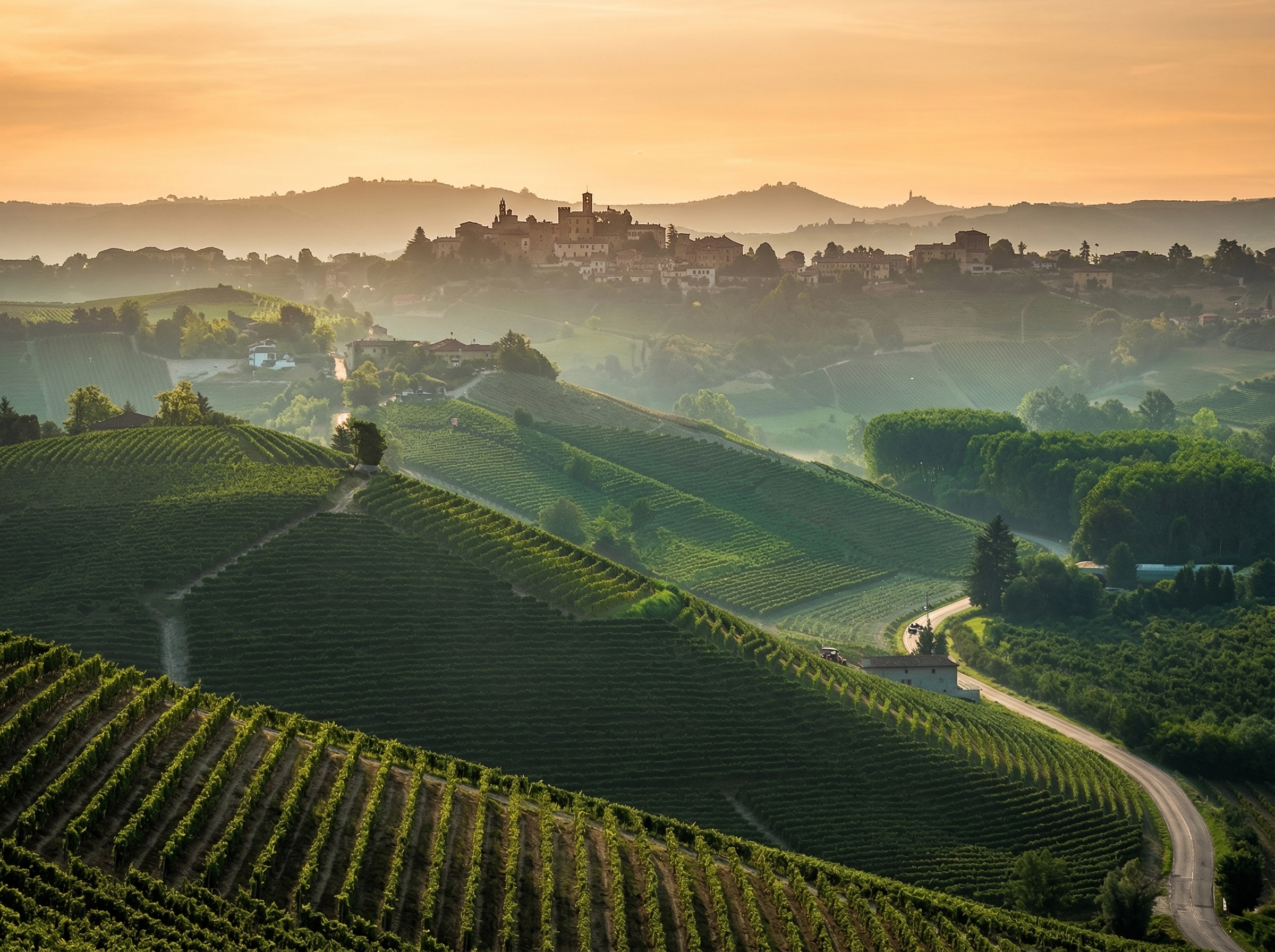
Benvenuti to Piedmont, a historical and culinary region in northwestern Italy. Discover Turin, one of the most beautiful art cities with magnificent squares and palaces, the culturally rich capital of Piedmont and former capital of Italy. Sample the delicious Italian cuisine and visit the characteristic Piedmontese vineyards for a wine tasting in the hilly landscape of Langhe and Roero, dotted with authentic villages and castles. In the summer, sun worshippers can indulge themselves at the stunning Lake Maggiore or at the Mediterranean Sea with our neighbors Liguria. Go skiing and descend the Olympic slopes of one of the largest international ski resorts in Europe, Via Lattea. Piedmont is ideal for a city break, an active hiking and cycling holiday in the mountains, or a relaxing holiday by the water.
Explore the city
Acqui Terme has stories to tell and places to discover
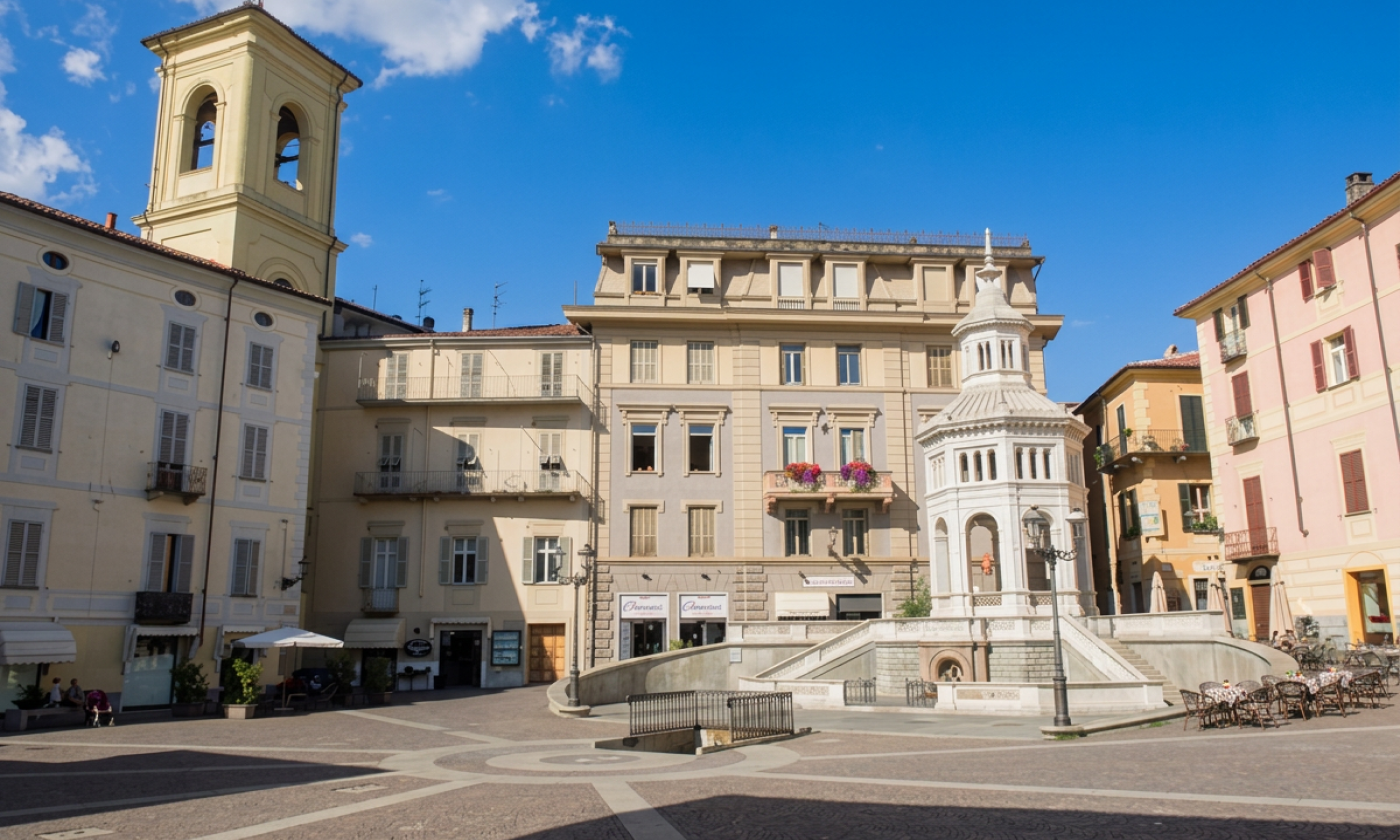
A Natural Hot Spring in the Heart of Acqui Terme
Acqui Terme has something strange and fascinating about it. It has a fountain from which steam rises. And it is purely natural. It is real water, sulfurous, saline, bromine-rich, and iodine-rich, spewing out in the middle of the square at a temperature of 74 degrees Celsius. It is one of the few cities in the world where a natural hot spring is literally located in the historic center, accessible to everyone, at any time. We are talking about the Bollente.
The structure housing the spring is an eclectic octagonal temple, designed by architect Giovanni Cerruti and inaugurated in 1879. Elegant, solid, with the appearance of a 19th-century monument that breathes serious history. In the center of the temple, the spring delivers a remarkable 560 liters of water per minute, a remarkable flow rate that has supplied the city's thermal baths with water for centuries and still attracts curious visitors from far and wide.
Right next to it stands the Town Clock Tower, nicknamed the "tower without foundations" because, incredibly enough, it rests on the surrounding houses rather than on the ground. It was built in 1763 on the foundations of an old gate in the medieval city wall and stands proudly next to the spring to this day, almost like a sentinel.
The roots of this place go back much further than the 19th century. Acqui was already known and frequently visited in Roman times, when the thermal waters had recognized therapeutic value and the baths were meeting places. On Via Saracco, the street leading to Piazza della Bollente, beneath the old porticoes, the remains of a mosaic floor from that period, discovered in the 19th century, can still be seen. Later excavations brought to light the remains of a Roman pool, a fountain, other buildings, and even the old hospital of Sant'Antonio Abate in Balneas. A fragment of a buried city, discovered by chance, demonstrating how this corner of Piedmont was already a place of healing and passage.
Healing Waters, Local Legends, and the Brentau Tradition
The water from Bollente is more than just a feast for the eyes. Its chemical composition, rich in sulfur, bromine, and iodine, makes it particularly effective in the treatment of various ailments. In the spas of Acqui, it is primarily used for respiratory ailments, but also for rheumatism, arthritis, and skin conditions. Thermal mud, prepared by mixing the spring water with selected types of clay, completes the city's therapeutic offerings. In the underground reservoir, the temperature can reach up to 120 degrees Celsius before mixing with the surface water: a detail that gives an idea of the energy beneath the feet of those strolling leisurely through the center of Acqui.
Throughout the centuries, the Bollente has also played a distinct folkloric role. According to legend, newborns in Acqui were taken to the spring immediately after birth and briefly immersed in boiling water. Those who survived - and they probably all survived, since it was only for a moment - were given the title "sgaientò," which means "burned" in the Acqui dialect. A bizarre tradition that sounds almost cruel today, but which demonstrates how central this place was to the life and collective imagination of the community. A rite of passage connected with water, as if the city itself had to acknowledge its children through its most precious resource.
There was another historical figure connected to the Bollente whom almost no one remembers today: the Brentau. He was responsible for carrying the Brenta, a galvanized metal container filled with hot water straight from the spring, to the homes of the inhabitants of Acqui. He carried the Brenta on his shoulders. Before modern heating, this was an indispensable service, and those who carried the Brenta earned their living from it. The Brenta had a spike at the top, a so-called "broca," which served as an indicator of the amount of water being transported: up to 50 liters could be carried per load, a considerable weight. The Brentaus were well-known figures in the town, often recognizable by their nicknames. One of the most famous was "Caudren." And some older residents of Acqui still remember a Brentau woman, a figure so deeply etched in the local imagination that she even appeared on postcards of the town.
Nowadays, you see Brentau water bottles almost exclusively at antique markets or during one of the most anticipated events of the year: the Palio del Brentau, which takes place in Acqui Terme every September. It is a real competition, complete with participants in costume, where participants compete to carry water from the spring. The winner is the one who carries the most water within the set time. It seems simple, but with 50 liters on your back, it becomes a whole different story. It is one of those moments when a city chooses not to forget, to keep alive a memory that would otherwise completely fade between generations.
The Symbol of Acqui Terme and Palazzo Scati Apartments
The Bollente is, in short, the symbol of a city that has built its identity around water, healing, and tradition. A spring that has seen Romans, medieval people, 19th-century visitors, and contemporary tourists pass by, that has fed spas, supplied homes with water, fueled legends, and inspired rituals.
It is worth pausing for a moment in front of that octagonal sanctuary, watching the steam rise, and perhaps asking a local what it means to them. Then walk into Via Saracco, look for the Roman mosaics beneath the porticoes, and realize that history in Acqui cannot be found in museums: it can be found on the street, under your feet, and it still buzzes.
Two of our rental apartments are located in the heart of the city, Piazza della Bollente. They are situated in the Palazzo Scati. After a complete renovation, they have become modern apartments with clear historical influences and charm.